

Care too much what other people think? Say yes when you shouldn’t? Here’s what to do.
Un-fawning 101

Have you ever walked out of a conversation thinking, Why did I just say yes to that? Or spent an absurd amount of time wondering whether someone is mad at you? Or found yourself shape-shifting into whatever version of you seems least likely to rock the boat?
There’s a name for all of this: fawning.
It’s a reflexive threat response—just like fight, flight, or freeze—but instead of running or shutting down, you appease. You smooth things over. You caretake. Not because you’re “nice,” but because your body has calculated that this is your safest available option.
Fawning is a survival strategy—especially for people who grew up in unpredictable or unsafe environments. But it can also show up in everyday life for the rest of us: with bosses, partners, parents, teachers, or anyone we don’t want to anger or disappoint.
So how do you un-fawn?
Dr. Ingrid Clayton argues that un-fawning happens on two fronts: inside your body and out in the world:
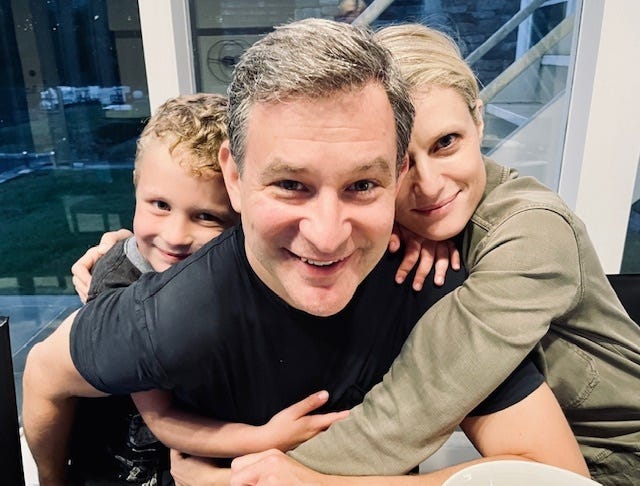
Internal work: Regulate your nervous system. Fawning is a threat reflex, so step one is helping your body relax. Ingrid recommends recalling a moment when you felt genuinely safe. That tracks with the work I’ve done on my panic disorder around flying. On one flight, my therapist had me look at a photo of my wife and son hugging me. I normally roll my eyes at “happy place” advice, but that picture reliably softened the panic enough to keep me present. Unfawning works the same way: you show your body safety can come from within.

External work: Tiny acts of agency. Once you have even a little inner stability, you can try small shifts out in the real world — the kind that let you tell the truth in low-stakes situations. Examples Ingrid offers: correct the wrong food order; admit you’re tired and want to go home; try a modified boundary: “I can help Friday, but I need to be done by nine.” These micro-risks teach your system that being truthful doesn’t automatically lead to danger. Each small win updates your internal threat meter.
For more on fawning, nervous-system regulation, boundaries, and why healing isn’t a finish line, listen to today’s episode of 10% Happier with Dr. Ingrid Clayton.
Paid subscribers get a custom guided meditation from December Teacher of the Month Jeff Warren called “How to Handle Demands and Pressure from Other People.”
Also out this week: my episode with author Michael Easter, where we talk about scarcity, habits, craving, and consumption. There’s a guided meditation for this episode, too, called “A Meditation for Chronic Pain (and Other Hard Shit).”
Tomorrow Jeff Warren and I are going live for a guided meditation and Q&A sesh, for paid subscribers. Zoom link beneath the paywall below. Drop your questions in the chat.
One more thing: This year we’re taking part in #PodsFightPoverty—a joint effort across dozens of podcasts to support families in Rwanda with direct cash aid. Research shows that giving cash directly to families is one of the most effective ways to reduce poverty. If you’re planning your year-end giving, consider joining us at GiveDirectly.org/Dan. Right now, your gift gets a 50% boost thanks to matching funds.
Paid subscribers get the 10% Happier podcast ad-free, as well as:
A cheatsheet for each episode — with key takeaways, time-coded highlights, and a transcript
The ability to comment on posts and participate in subscriber chats
Access to our weekly live video sessions on Zoom, in which I and/or our meditation Teacher of the Month guide a meditation and take questions
Tailor-made meditations every Monday and Wednesday, led by our meditation Teacher of the Month and designed to pair with the podcast episodes
Join the party.
Join us live on Zoom
Our next weekly Live Meditation and Q&A for paid subscribers is Tuesday, Dec. 2 at 4:00 p.m. ET with Teacher of the Month Jeff Warren and me.
You can join from your browser on your laptop or desktop (no download needed) or download the Zoom app for your device.